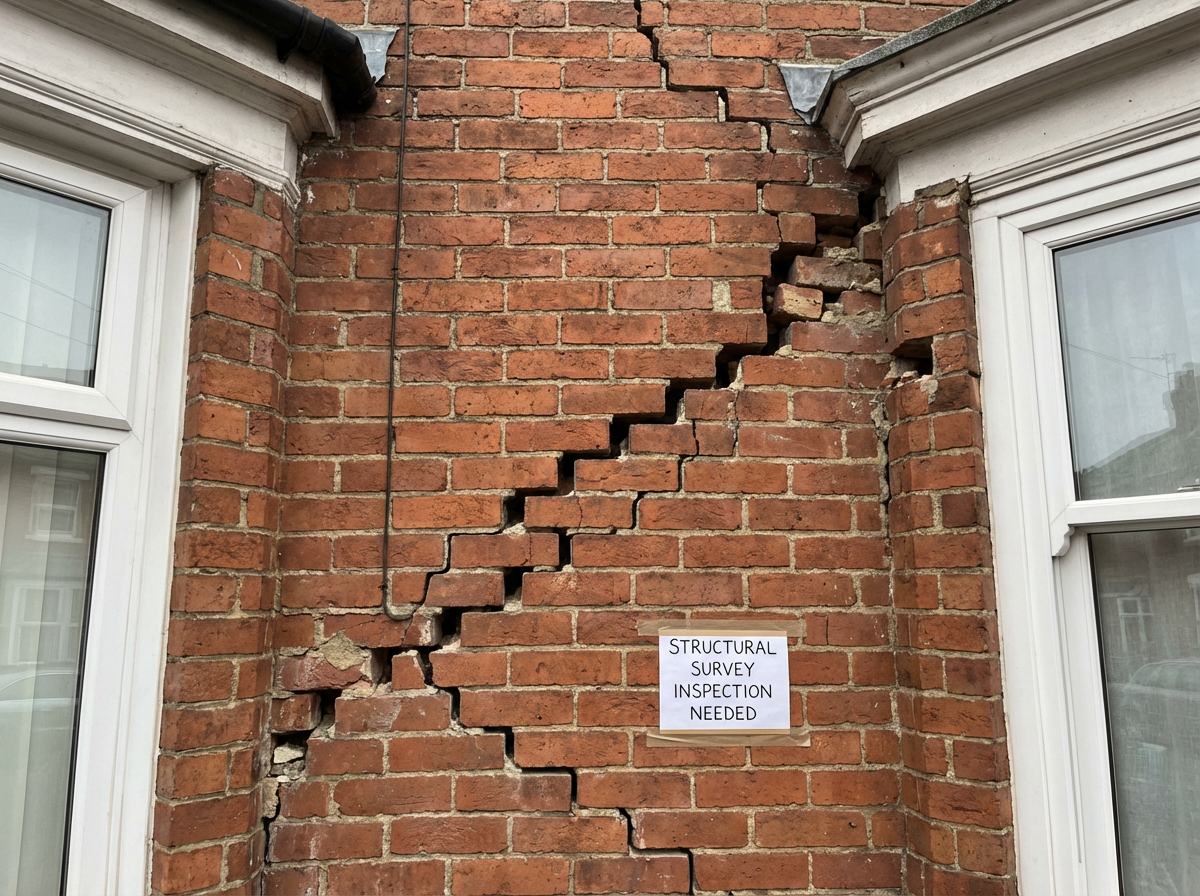
It's a question I get asked at least once a week. Someone has found a property they love — maybe a Victorian terrace near Barking Park, or an Edwardian semi somewhere in Dagenham — and they're trying to work out which survey they need. Their estate agent is telling them the Level 2 will do fine. Their mortgage broker has mentioned a valuation. And now they're searching the internet at midnight, trying to figure it all out.
So let me give you the honest answer. Not the answer that maximises our fees. The answer I'd give my own family member.
What Actually Is a Level 3 Building Survey?
The RICS Level 3 Building Survey — still commonly called the "full structural survey" — is the most detailed inspection available for a residential property. It was renamed as part of the RICS Home Survey Standard introduced in 2021, but the substance is the same as it always was.
A Level 3 survey involves a thorough, expert assessment of every accessible part of the building. That means the roof structure (including the loft space), all external and internal walls, floors, ceilings, chimneys, drainage, services (as far as visible), and any outbuildings or garages. The surveyor produces a detailed written report describing the condition of each element, rating its severity, and — importantly — advising on likely repair costs and what happens if you leave it untreated.
This is quite different from a Level 2 Homebuyer Survey, which uses a quicker, more standardised format and is suited to properties in reasonable condition that don't need a forensic look.
When Do I Actually Need One?
Here's my rule of thumb: if the property was built before 1919, or if it's showing any visible signs of defects (cracks, damp, uneven floors, recent alterations), you should get a Level 3.
Here's a more complete list of situations where I'd always recommend the Level 3 over any other survey:
- Victorian terraces — especially common throughout Barking, Dagenham, and East Ham. These are typically 100–140 years old. Their solid brick walls, suspended timber floors, and original drainage systems need expert assessment.
- Any property over 100 years old — the construction techniques and materials used are quite different from modern building regulations, and failure modes are specific to the era.
- Properties showing signs of movement — cracks above windows, diagonal cracks at door corners, sloping floors, or gaps between the bay window and the main structure are all red flags.
- Properties that have been extended or altered — building work isn't always done professionally or with the right permissions. An extension could be hiding a botched job that the Level 2 wouldn't pick up.
- Properties being sold "as seen" or at a discount — if a vendor is accepting a lower price, there's usually a reason. Find out what it is before you commit.
- Large or unusual properties — detached houses, listed buildings, converted properties.
A Real Example from Barking
Last year, a client — I'll call him Marcus — was buying a mid-terrace Victorian property on a residential street near Barking station. The estate agent said it was "in good nick" and suggested a Level 2 would be "more than enough." The mortgage valuation came back fine.
Marcus commissioned a Level 3 building survey with us. Here's what we found:
- Active rising damp in the front bay — confirmed by calibrated moisture readings. The previous owner had applied a coat of waterproof paint to disguise it.
- Significant deflection in the main roof ridge, indicating long-term spread of the roof structure. The ceiling immediately below had been recently re-plastered — another disguise.
- Three lintels above first floor windows that were corroding inside the masonry, causing the brickwork above to crack and bow outward.
- The rear extension — added sometime in the 1980s — had no visible damp proof course and the roof junction with the main house was leaking.
Total estimated repair cost: £22,000–£26,000. Marcus used the report to renegotiate £18,000 off the asking price. He still bought the property — he loved it — but he bought it knowing exactly what he was taking on, and at a fair price.
A Level 2 survey would not have found most of this. It simply isn't designed to.
What About the Cost?
I won't pretend it's cheap. A Level 3 building survey for a typical three-bedroom Victorian terrace in Barking will generally cost between £600 and £800 depending on the size and condition of the property. Compare that to a Level 2 at £400–£500.
But ask yourself: what's the cost of missing £20,000 of repairs? What's the cost of buying a house with subsidence that your insurer later refuses to cover? What's the cost of discovering rising damp after you've moved in and spent £30,000 on a new kitchen?
The Level 3 survey is an insurance policy — one that typically pays for itself many times over.
Can a Level 2 Ever Be Enough?
Yes. If you're buying:
- A post-1980 property in good visual condition
- A flat in a modern block
- A new-build property (where you'd need a snagging survey instead)
- A property you've already had independently assessed and found to be in excellent condition
…then a Level 2 homebuyer report may well be sufficient. We'll always recommend the right survey for your specific property — not the most expensive one.
What to Do Next
If you're buying in Barking, Dagenham, Ilford, or anywhere across East London, and you're not sure which survey to choose, just ask us. We offer free advice on the right survey type — no commitment, no charge. Tell us about the property and we'll give you an honest recommendation.
Get in touch with Barking Surveyors today — or read more about our Level 3 building survey service.
Frequently Asked Questions
For a flat, the Level 2 homebuyer survey is usually more appropriate, as the surveyor will inspect the parts of the building you own and report on common areas. However, if the block is Victorian-converted or showing issues, a Level 3 on the whole building may be worth discussing with your solicitor.
Expect the on-site inspection to take 3–5 hours for a standard three-bedroom terrace, longer for larger properties. The written report is usually ready within 3–5 working days. You don't need to be present, but we're happy to meet you at the property if you prefer.
A Level 3 survey covers all visually accessible parts of the property. We can't open up walls, lift fixed floorboards, or test covered drainage without specific instructions. If we suspect a hidden problem, we'll recommend further investigation by a specialist. No survey can guarantee to find every defect, but a Level 3 is as thorough as a visual inspection gets.
Ready to Book Your Level 3 Survey in Barking?
Get a fixed-price quote from a local RICS-accredited surveyor. Fast turnaround, plain-English report.
Get a Free Quote