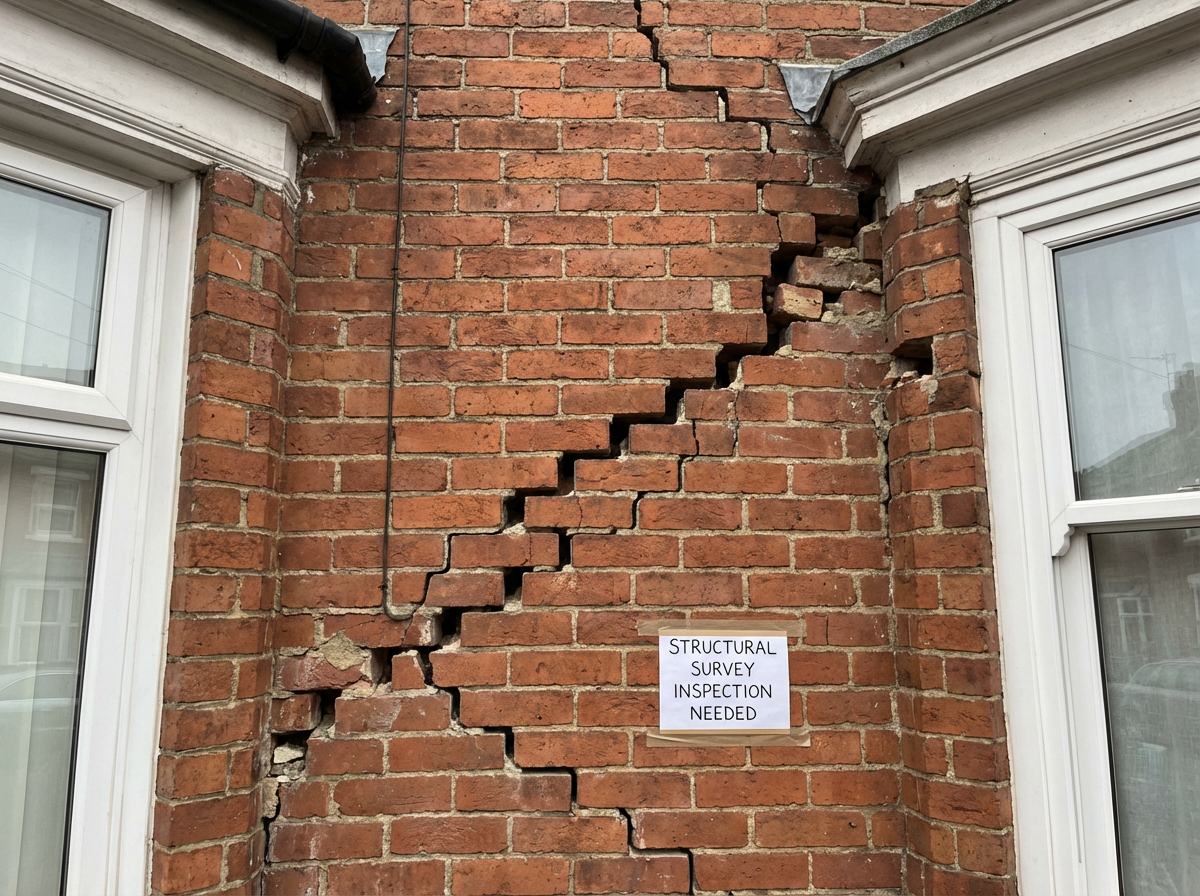
Subsidence is one of the most feared words in UK property. Mention it at a viewing and watch the atmosphere change. But while it's a serious issue, it's also one that's frequently misunderstood, overreacted to, and sometimes missed entirely. As a building surveyor working in East London, I want to give you the straight facts.
What Is Subsidence?
Subsidence is the downward movement of the ground beneath a building's foundations. When the ground moves down, the building above moves with it — and if different parts of the building move by different amounts, cracking occurs. This is what makes subsidence so damaging: it's not uniform settlement, but differential movement.
It's distinct from settlement — which is the gradual, expected compression of the ground under a building's weight over time. Some settlement happens in almost every building and isn't a cause for concern. Subsidence is something more serious and active.
Why East London Is High Risk
East London — including Barking, Dagenham, Ilford, and much of the area covered by our surveys — sits on shrinkable London clay. This is one of the most problematic soil types in the UK for buildings. Here's why:
- In dry conditions (hot summers, drought periods), London clay loses moisture and shrinks. The ground drops. Foundations that were sitting on stable ground suddenly find it reduced beneath them.
- In wet conditions, the clay absorbs water and expands — a process called heave. This can push foundations upward, which is equally damaging in a different way.
- Trees are a major aggravator. Large trees — especially poplars, willows, oaks, and elms — draw enormous amounts of water from the soil. A mature oak within 10 metres of a Victorian terrace on London clay is a significant subsidence risk.
Warning Signs of Subsidence
Here's what to look for when viewing properties in Barking and East London:
- Diagonal cracking running at 45 degrees from the corners of doors and windows — especially on external walls.
- Cracks that are wider at the top than the bottom — indicating downward movement at one side.
- Doors and windows that stick or won't close properly, particularly in the lower storeys.
- Floors that slope or feel uneven — use your phone level app to check if you're suspicious.
- Separation between bay window and main structure — the bay window has shallower foundations and moves differently to the main house.
- Wrinkled or rippled wallpaper near the corners of rooms, or plaster cracking above door frames.
- Large trees within 5–10 metres of the property.
What Happens If My Survey Flags Subsidence?
First, don't panic. A mention of subsidence risk in a survey report is not automatically a deal-breaker — but it does need to be investigated properly.
The appropriate next step depends on the severity:
- Active, progressing subsidence — requires specialist structural engineer's report, and possibly underpinning. This is expensive (£15,000–£50,000+) and will affect insurability. You need to know this before buying.
- Historic movement, now stable — many properties in East London show signs of past movement that has since stabilised. A building that has been stable for 20+ years is not the same risk as one that's actively moving. Your surveyor should distinguish between the two.
- Settlement cracks — small cracks that have been there since construction and show no signs of recent growth. Often cosmetic and not structurally significant.
Subsidence and Property Insurance
If a property has a history of subsidence, it will be on a register with the NHBC or insurers. This affects insurance premiums significantly — sometimes making the property very expensive or difficult to insure. Your solicitor should check this as part of the conveyancing process, but your surveyor should also flag it.
A Case Study: Barking IG11
I surveyed a Victorian terrace in a quiet residential street in Barking last year. The property had diagonal cracks above the ground-floor windows, and the bay window had a visible gap of around 12mm from the main structure. The estate agent described these as "normal settlement for a Victorian terrace." They weren't.
I recommended a specialist structural engineer's investigation. It revealed active subsidence caused by the root system of a mature tree in the front garden. The movement had been ongoing for approximately 10 years. Resolution involved tree removal, root barriers, and monitoring — plus eventual underpinning. Total cost estimate: £22,000–£28,000.
My client withdrew from the purchase. It was the right decision.
Worried About Subsidence in Your East London Property?
Our Level 3 building surveys include detailed structural assessments. Book today.
Book a Building SurveyYes, but it can be harder and more expensive. Specialist insurers cover properties with subsidence history. Your mortgage lender will require buildings insurance as a condition of the loan. If the property has been underpinned and monitoring shows it's now stable, most mainstream insurers will cover it — though you should disclose the history.
No. Most cracking in older properties is cosmetic — fine hairline cracks in plaster caused by thermal movement, or small shrinkage cracks in mortar joints. True structural cracking is typically wider than 5mm, diagonal, and affecting structural elements. Your surveyor will distinguish between the two types.