Victorian terraced houses make up a large proportion of the housing stock in the London Borough of Barking and Dagenham. Built mainly between 1880 and 1905, they're solid, characterful homes with high ceilings, bay windows, and original features that simply can't be replicated in modern builds. Many of our clients choose them over newer properties specifically for these qualities.
But Victorian terraces also come with specific risks and quirks that every buyer should understand. I've spent fifteen years surveying them across East London, and I can tell you exactly what to look out for.
The Construction of a Typical Barking Victorian Terrace
Understanding how Victorian terraces were built helps you understand why they fail in certain ways:
- Solid brick walls — not cavity walls. The outer and inner leaf of brickwork are laid together in a bond (Flemish or English), with no air gap. This is strong and heavy, but moisture can migrate through.
- Suspended timber ground floors — the ground floor sits on timber joists supported on 'sleeper walls', with a void beneath. This provides essential ventilation — and when that ventilation fails, you get rot.
- Lime mortar pointing — older than roughly 1920, most properties used lime-based mortar rather than today's cement-based mortars. Lime is actually better at allowing the masonry to 'breathe' — but it degrades over time and needs repointing.
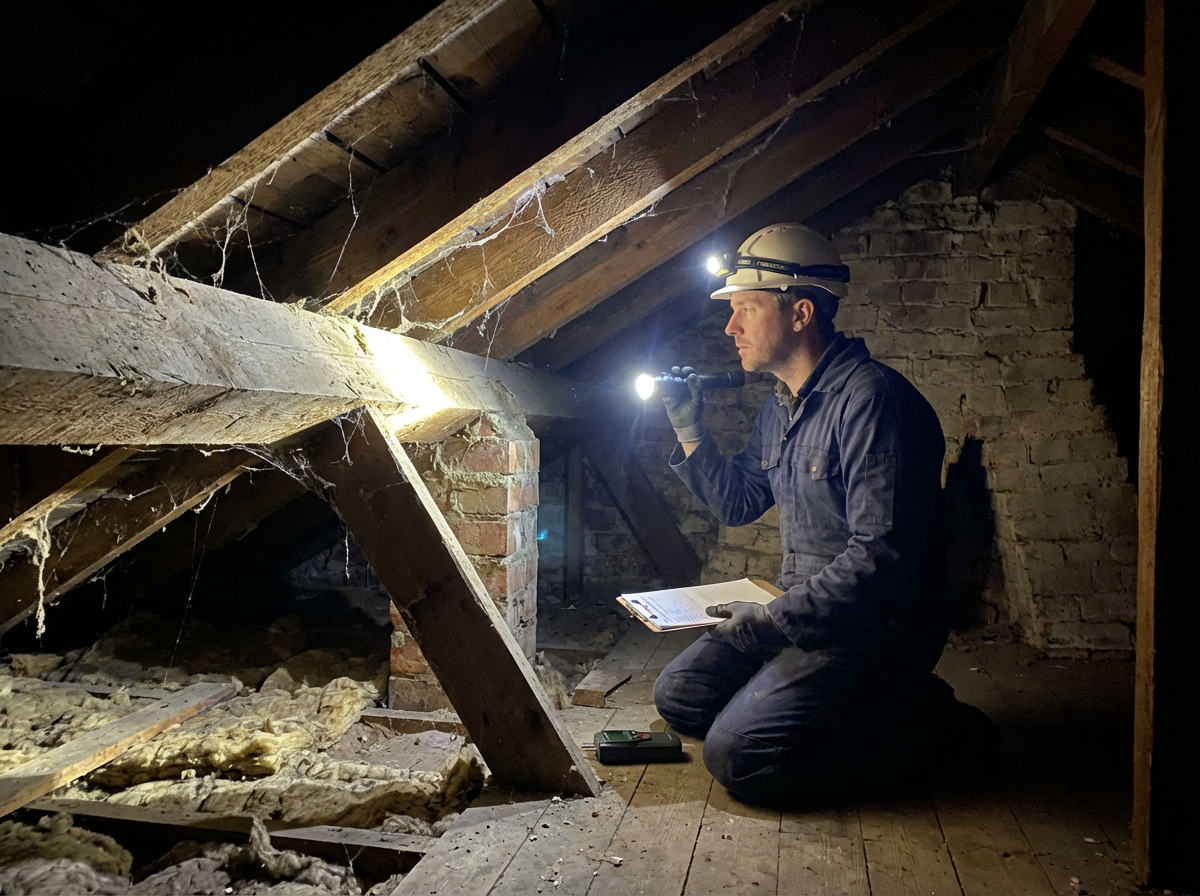
- Slate or clay tile roof — original Victorian roofs used either natural slate or plain clay tiles on softwood battens, with minimal felt underlay beneath. After 100+ years, these roofs often need significant attention.
- Lead flashings — around chimneys and at roof junctions. Lead is durable but can be damaged, stolen (yes, really), or simply crack at folded joints over time.
The Ten Most Common Issues We Find in Barking Victorian Terraces
- Rising damp — failed or missing damp proof course, bridged DPC from raised external ground levels. Very common throughout Barking. Read our full rising damp guide.
- Wet rot and dry rot in floor timbers — inadequate sub-floor ventilation leads to moisture accumulation and timber decay. Often worst in the front bay and back addition.
- Failed pointing and spalled brickwork — decades of weathering, combined with inappropriate cement repointing (which can trap moisture and cause frost damage), leads to deteriorating brickwork.
- Bay window movement — Victorian bay windows have shallower foundations than the main house. They move more, and the junction between bay and main structure is a classic cracking point.
- Chimney stack deterioration — tall stacks are exposed to the weather on all sides. Pointing fails, lead flashings crack, and the stack can lean or crack at the roof line.
- Outdated electrical installations — rubber-insulated wiring, no RCD protection, single-core cables, inadequate earthing. Older electrical systems are a fire risk and require full replacement.
- Single-glazed sash windows — original sash windows are charming but draughty, poorly insulating, and often in very poor condition by now. Replacement or restoration is expensive.
- Roof structure spread — the ridge of Victorian roofs can sag as the roof timbers spread over time, particularly if the ridge board has deteriorated. This can cause cracking in internal walls below.
- Lead pipe to main water supply — many Victorian terraces in Barking still have the original lead supply pipe from the main to the property. Lead pipes should be replaced as a priority.
- Subsidence — particularly where large trees (especially limes and poplars, common in Barking's streets) are close to the building. Read our subsidence guide.
Why You Should Always Get a Level 3 Survey for a Victorian Terrace
I cannot overstate this. A Level 2 homebuyer survey is simply not designed for Victorian properties. It's a standardised format that works well for conventional modern homes — but Victorian terraces need a forensic look.
A RICS Level 3 building survey includes detailed inspection of all accessible structural elements, calibrated damp readings, timber assessment, and specific guidance on the repair and maintenance of period features. It will also identify whether any alterations to the property (rear extensions, loft conversions, removal of chimney breasts) have been carried out properly.
What Victorian Terraces Cost to Maintain
This is something first-time buyers in particular underestimate. Victorian terraces require more maintenance than modern homes — that's simply a fact. Budget for:
- Periodic repointing (every 40–60 years)
- Roof work every 30–50 years (or more often if it hasn't been maintained)
- Sash window maintenance or replacement
- Periodic damp course treatment if needed
- Eventual boiler and heating system upgrade
- Electrical rewire (if not already done)
None of this means you shouldn't buy a Victorian terrace. But go in with open eyes, and make sure the price reflects the condition.
"James found issues in our Victorian terrace that I never would have spotted — and some that I shouldn't have missed either! The report was incredibly detailed and he talked us through everything on a call. Invaluable." — Ravi A., Dagenham
Buying a Victorian Terrace in Barking?
Get a Level 3 building survey from a local expert who knows these homes inside out.
Book a Level 3 Survey