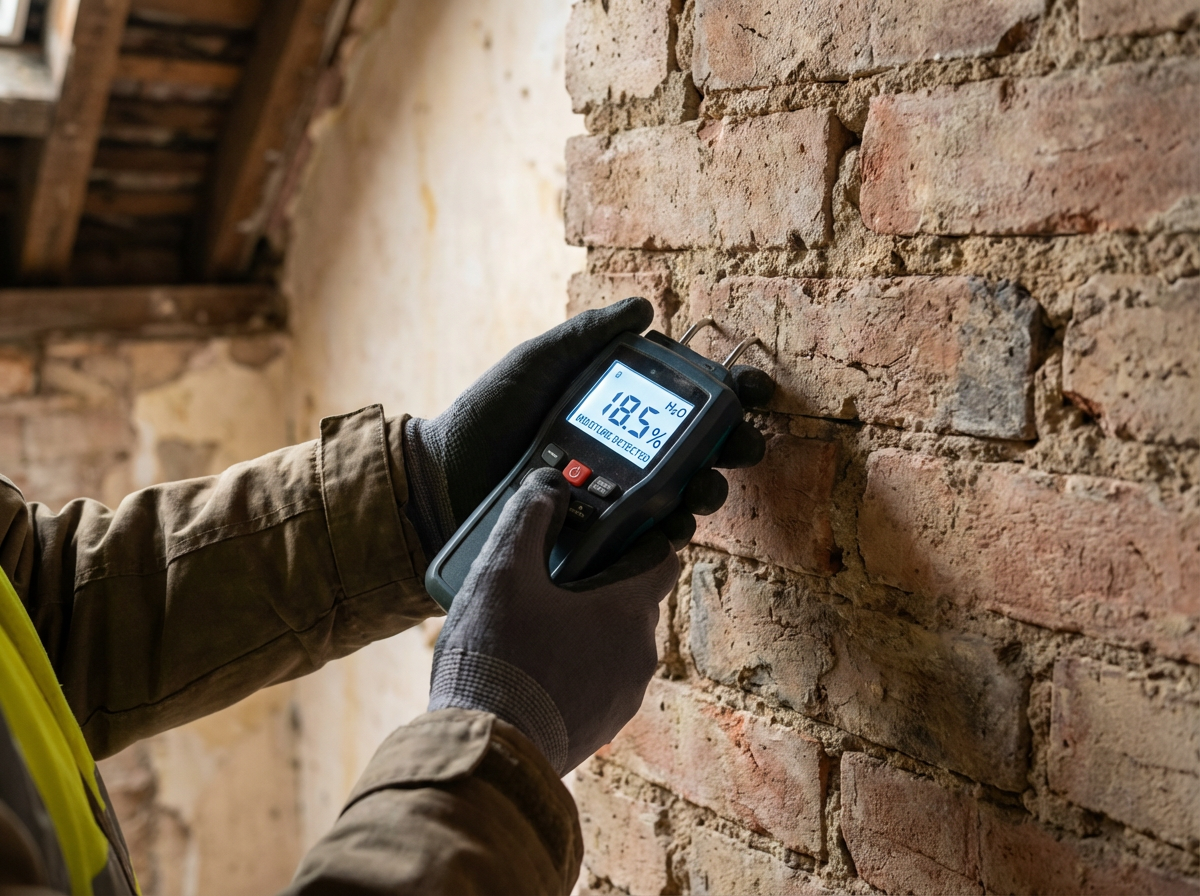
In Barking's stock of Victorian and Edwardian properties, timber is everywhere — floorboards, roof structures, window frames, skirting boards, door frames, and in older homes, even the structural wall plates. And where there's timber, there's the potential for decay and infestation. Understanding the difference between dry rot, wet rot, and woodworm — and what each means for a property purchase — is something every buyer should know.
Dry Rot: The Most Serious Timber Problem
Dry rot (Serpula lacrymans) is, despite its name, caused by moisture — specifically, persistently damp conditions (moisture content above approximately 20%) in timber. Once established, it's uniquely destructive because the fungus can spread through masonry, behind plaster, and across large areas of a building, even into sections of timber that are not themselves damp.
Signs of dry rot include:
- Deep cuboidal cracking of affected timber
- Rust-red spore dust on surfaces
- White or grey mycelium (the fungal body) spreading across walls and timber
- A distinctive musty, mushroom-like smell
- Fruiting bodies (bracket-like orange/brown growths) in severe cases
Treatment is complex and expensive. It requires removing all affected timber and a significant buffer of apparently sound timber around it, treating the masonry with fungicide, and improving ventilation and moisture control to prevent reoccurrence. For a standard Victorian terrace in Barking, serious dry rot can cost £8,000–£25,000 to remediate.
Wet Rot: Less Dramatic, Still Important
Wet rot is caused by a range of fungal species and, unlike dry rot, doesn't spread into dry materials. It remains confined to areas of persistently high moisture — typically around leaking gutters, failed window sills, burst pipes, or poorly ventilated sub-floors.
Signs of wet rot:
- Soft, spongy, darkened timber
- Timber that crumbles easily when probed with a penknife
- Paint or surface coating flaking or bubbling
- A slightly darker appearance compared to adjacent sound timber
Wet rot treatment is more straightforward than dry rot — fix the source of moisture, remove and replace affected timber, and monitor. Costs vary but are typically £2,000–£8,000 depending on the extent.
Woodworm: Often Overreacted To
Woodworm is the larvae of wood-boring beetles — most commonly the Common Furniture Beetle (Anobium punctatum) in UK properties. The larvae bore into timber to feed, creating characteristic small round exit holes (about 1–2mm diameter) as they emerge as adult beetles.
Here's the important thing that many buyers don't know: the presence of woodworm holes doesn't automatically mean there's an active infestation. The holes show where adult beetles emerged — which may have been 20, 30, or 50 years ago. Active infestations show "frass" — fine, powder-like wood dust around the exit holes — and fresh, clean-edged holes.
In our experience surveying Barking's older housing stock, we find historic woodworm evidence in perhaps 30% of pre-1950s properties. In most cases, the activity is historic and not a current concern. We will always distinguish clearly between historic and active infestations in our reports.
Treatment for active woodworm typically involves boron-based sprays or pastes applied to accessible timbers. For most residential properties, this costs £500–£2,500.
What to Do If Your Survey Flags Timber Issues
- Don't panic. Most timber issues are manageable when identified early. Dry rot is the most serious, but even that is treatable.
- Understand the distinction. Ask your surveyor (us!) whether they're seeing active or historic activity, and whether they believe it's dry rot, wet rot, or woodworm.
- Get a specialist report if recommended. For suspected dry rot, we'll always recommend a specialist timber and damp contractor's investigation before exchange. This gives you accurate remediation costs to use in negotiation.
- Use the findings to renegotiate. See our renegotiation guide for how to approach this with vendors.
Concerned About Timber in Your Barking Property?
Our specialist damp and timber surveys give you calibrated, accurate assessments — not guesswork.
Book a Damp & Timber Survey