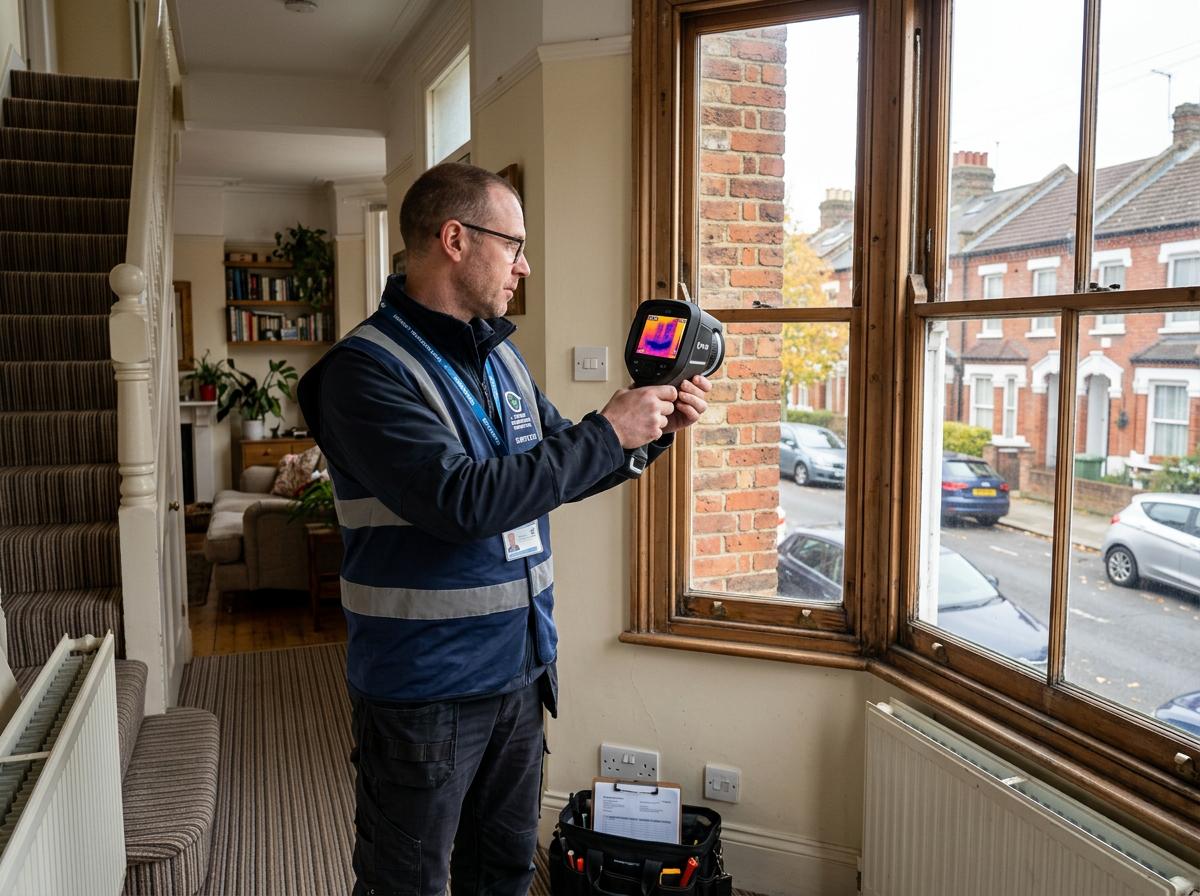
Energy costs are at the forefront of every homeowner's mind right now. For property buyers and sellers in Barking, understanding your Energy Performance Certificate (EPC) rating — and knowing how to improve it — can make a real difference to your running costs, your mortgage eligibility, and ultimately your property's value. Our Barking Surveyors team explains everything you need to know.
What Is an EPC and Why Does It Matter in Barking?
An Energy Performance Certificate (EPC) is a legal requirement when you sell or let a property in England and Wales. It gives your home an energy efficiency rating from A (most efficient) to G (least efficient), along with an environmental impact rating and a list of recommended improvements. EPCs are valid for ten years, but the energy efficiency landscape — and government regulations around minimum standards — changes faster than that, so it pays to understand your property's current position.
In Barking, as in much of East London, the housing stock is dominated by Victorian and Edwardian terraced houses built before modern insulation standards existed. The London Borough of Barking and Dagenham has one of the highest proportions of older housing in Greater London, which means energy efficiency can be a significant issue. Many homes in the area carry D, E or even F ratings — meaning higher energy bills and, increasingly, difficulties with mortgage lending and lettings regulations.
The EPC Rating Scale Explained
EPC ratings run from 1 to 100, grouped into bands:
| Band | Score Range | Description | Typical Annual Cost* |
|---|---|---|---|
| A | 92–100 | Most efficient | ~£500–£700 |
| B | 81–91 | Very efficient | ~£700–£900 |
| C | 69–80 | Good | ~£900–£1,200 |
| D | 55–68 | Average | ~£1,200–£1,700 |
| E | 39–54 | Below average | ~£1,700–£2,500 |
| F | 21–38 | Poor | ~£2,500–£3,500 |
| G | 1–20 | Least efficient | £3,500+ |
*Indicative annual energy costs for a mid-terraced house in East London. Actual costs vary depending on occupancy and usage.
Why Your EPC Rating Is Increasingly Important
The EPC is no longer just a tick-box exercise. It has very real implications for buyers, sellers, landlords and tenants:
Mortgage Lending
An increasing number of mortgage lenders now offer preferential "green mortgage" rates for properties rated A or B. Conversely, properties rated F or G can be difficult to mortgage at all. As government minimum standards tighten, lenders are increasingly factoring energy efficiency into their risk assessments. If you are buying a property in Barking with a low EPC rating, it is worth discussing this with your mortgage broker before you proceed.
Landlord Obligations
Since April 2020, landlords in England have been required by law to ensure their rental properties achieve at least an E rating on the EPC before a new tenancy can be granted. The government has proposed tightening this to a C rating by 2028 for new tenancies, with all tenancies required to meet this standard by 2030. For landlords in Barking with older properties, this could mean significant investment in insulation, heating upgrades, and other improvements.
Property Value
Research consistently shows that properties with higher EPC ratings sell for more money and sell faster. A study by the Department for Energy Security and Net Zero found that moving from an EPC rating of D to C can increase a property's value by up to 5% in some areas of London. In a competitive market like Barking, that can make a real difference to your sale price.
The Most Common Energy Efficiency Issues in Barking Properties
After surveying thousands of properties across Barking and East London, our surveyors at Barking Surveyors have identified the energy efficiency issues that come up most frequently:
Solid Wall Insulation
Victorian and Edwardian terraced houses — which make up a huge proportion of Barking's housing stock — were built with solid brick walls, typically 225mm (9 inches) thick. Unlike modern cavity walls, solid walls cannot simply have insulation pumped into the cavity. The options are external wall insulation (applied to the outside of the building) or internal wall insulation (applied inside each room). Both are disruptive and expensive, but they can have a transformative impact on energy bills — reducing heat loss through walls by up to 40%.
Uninsulated Loft Spaces
Heat rises, and an uninsulated loft can account for up to 25% of a property's heat loss. The good news is that loft insulation is one of the cheapest and most effective energy efficiency improvements you can make. Current government guidance recommends at least 270mm of mineral wool insulation in accessible loft spaces. Many Barking properties still have insufficient or no loft insulation, particularly older properties where insulation was never installed or has degraded over time. Our surveyors flag loft insulation levels in every Level 3 building survey we carry out.
Single Glazing
A significant number of properties in older parts of Barking still have single-glazed windows, either original timber sash windows or poor-quality replacement units. Single glazing loses roughly ten times more heat than modern double glazing. Replacing single glazing with A-rated double or triple glazing units is one of the most effective ways to improve both energy efficiency and comfort — though in conservation areas or listed buildings, permitted development rights may restrict the type of glazing that can be installed.
Older Boilers and Heating Systems
Gas boilers installed before 2005 are typically far less efficient than modern condensing boilers. An old G-rated boiler operating at around 65% efficiency means that 35% of the gas you pay for is going straight up the flue. Modern A-rated condensing boilers operate at over 90% efficiency. While the government's long-term direction of travel is towards heat pumps and other low-carbon heating technologies, replacing an ageing boiler with a modern condensing unit remains one of the most cost-effective short-term improvements for most Barking homeowners.
Poor Draught Proofing
Older properties in Barking are often draughty — not just through windows and doors, but through floorboards, skirting boards, letterboxes, and unused fireplaces. Draught proofing is one of the cheapest and simplest improvements you can make, and the Energy Saving Trust estimates it can save up to £200 per year in heating costs. Our surveyors look for evidence of draughts during inspection and note where improvement is needed.
How a Building Survey Can Help With Energy Efficiency Planning
Our RICS Level 3 Building Survey does not replace a formal EPC assessment, but it provides far more context and detail than the EPC alone. During a building survey, our surveyors assess:
- The construction type of external walls (solid brick, cavity, or insulated cavity)
- The condition and extent of existing loft insulation
- The type and condition of windows and doors
- The age, type and condition of the heating system and hot water cylinder
- The presence and condition of any existing underfloor insulation
- Any evidence of cold bridging, condensation, or thermal bridging at junctions
This information, combined with the EPC's recommendations, gives you a clear, prioritised picture of what improvements will have the greatest impact on your energy bills and your property's rating. If you are buying a property with a low EPC rating, our survey report will help you understand exactly what needs to be done — and budget for it accordingly.
Government Grants and Funding for Energy Efficiency in East London
There is financial support available for homeowners in Barking and Dagenham looking to improve their property's energy efficiency:
Great British Insulation Scheme
Launched in 2023, the Great British Insulation Scheme provides free or heavily subsidised insulation for properties with an EPC rating of D or below, where the household income is below £36,000 or the occupant is receiving certain benefits. Eligible improvements include loft insulation, cavity wall insulation, and solid wall insulation. The scheme is delivered through energy suppliers and local councils — the London Borough of Barking and Dagenham has been active in coordinating local delivery.
Boiler Upgrade Scheme
The Boiler Upgrade Scheme (BUS) offers grants of up to £7,500 towards the cost of installing an air source heat pump, or up to £6,000 for a ground source heat pump. This is intended to help homeowners transition away from gas boilers as part of the government's net zero strategy. Heat pumps work best in well-insulated homes, so tackling insulation first is often the right approach.
ECO4 Scheme
The Energy Company Obligation (ECO4) scheme requires larger energy suppliers to fund insulation and heating upgrades for low-income households and homes with poor energy ratings. Properties in Barking and Dagenham with ratings of D, E, F or G that are occupied by qualifying households may be eligible for a range of improvements at little or no cost.
Practical Steps to Improve Your EPC Rating in Barking
If your Barking property has a low EPC rating and you want to improve it, here is a practical, prioritised approach:
Commission a Current EPC
If your existing EPC is more than a few years old, get a fresh one done before you start any works. This gives you a baseline and means any improvements you make can be properly recorded.
Add or Upgrade Loft Insulation
This is the quickest win. Top up loft insulation to 270mm. If you have an accessible loft, this can often be done in a day at low cost — and it delivers immediate, measurable savings on your heating bill.
Address Draught Proofing
Seal gaps around windows, doors, floorboards, and unused chimneys. This is a low-cost job that makes an immediate and noticeable difference to both comfort and energy consumption.
Upgrade Windows to Double Glazing
If you still have single glazing, replacing it with modern double or triple glazing delivers both energy savings and improved security and noise reduction — particularly relevant in urban Barking.
Replace an Old Boiler
If your boiler is more than 15 years old, replacing it with a modern A-rated condensing boiler can save £200–£400 per year on heating bills. It will also have a noticeable positive effect on your EPC rating.
Consider Wall Insulation
For solid-walled Victorian and Edwardian properties in Barking, external or internal wall insulation is the biggest single energy efficiency improvement available. It is costly and disruptive but has the most significant impact on both EPC ratings and running costs.
💡 Surveyor's Tip
When buying a property with a low EPC rating in Barking, use it as a negotiating tool. Get quotes for the recommended improvements before you make your offer, then factor those costs into your offer price. Our surveyors can help you understand the full cost of bringing a property up to standard.
The Link Between Energy Efficiency and Damp
There is an important and often overlooked connection between energy efficiency improvements and damp and condensation problems. Older properties in Barking often have high air infiltration — draughts that allow moisture-laden air to escape. When you seal up a property to improve its energy efficiency without also ensuring adequate ventilation, you can unintentionally create the conditions for condensation and mould growth.
Our rising damp guide for Barking properties goes into this in more detail, but the key principle is: improve energy efficiency and ventilation together. Installing a good extract fan in the kitchen and bathroom, and ensuring trickle vents in windows are open, is essential when you are tightening up a property's air-tightness.
Energy Efficiency in Barking Riverside New Builds
Not all properties in Barking have energy efficiency problems. The new build developments at Barking Riverside — which now include thousands of new homes — are built to modern building regulations that mandate a high level of energy efficiency. Most new builds in the area achieve A or B ratings as standard.
However, even new builds are not always perfect. Our snagging survey team regularly finds issues with insulation installation, draught sealing around service penetrations, and poorly set up heating controls — all of which can undermine the theoretical energy performance of a new build. If you are buying a new build in Barking Riverside or elsewhere in the borough, a thorough snagging survey is a wise investment.
Frequently Asked Questions About Energy Efficiency Surveys in Barking
Do I need an EPC to sell my house in Barking?
Yes. It has been a legal requirement since 2008 to have a valid EPC before marketing a property for sale in England and Wales. The EPC must be made available to prospective buyers at the point of first marketing. EPCs are valid for ten years, so if your property has been sold or let within the last decade, there may already be a valid certificate on the national EPC register.
How much does an EPC assessment cost in Barking?
A standard EPC assessment for a typical two or three-bedroom terraced house in Barking costs between £60 and £120, depending on the assessor. The assessment itself typically takes 30–60 minutes and involves the assessor checking the construction type, insulation levels, glazing, heating system, and lighting.
Can a building survey tell me about my home's energy efficiency?
A building survey from Barking Surveyors does not produce an EPC, but it gives you much more detailed information about your property's construction and condition than the EPC alone. Our surveyors identify practical issues — like inadequate loft insulation, draughty windows, or an ageing heating system — and give you clear advice on what needs to be done and in what order.
Is it worth improving my EPC rating before selling?
It can be. Research suggests that moving from an E to a C rating can increase a property's value by 5% or more in parts of London. Even relatively cheap improvements — new loft insulation, draught proofing, and LED lighting — can move you up a band and make your property more attractive to buyers. Speak to our team for advice on which improvements offer the best return for your specific property.
What EPC rating do I need to rent out a property in Barking?
Currently, a minimum EPC rating of E is required for rented properties in England. The government has proposed increasing this to a minimum of C by 2028 for new tenancies and by 2030 for all tenancies. Landlords in Barking with older properties should start planning for this now, as improvements to solid-walled Victorian houses can take time to arrange and fund.
Can I improve my EPC rating without major works?
Yes. Simple improvements like topping up loft insulation, adding draught proofing, switching to LED lighting throughout the property, and installing a smart heating controller can all contribute to an improved EPC rating without major disruption or cost. In some cases, these measures alone can move a property up one or even two bands.
Book a Building Survey to Understand Your Property's Energy Performance
Whether you are buying a property in Barking and want to understand its true energy efficiency before you commit, or you already own a home and want to know what improvements will have the greatest impact, our Barking Surveyors team is here to help.
Our RICS and CIOB-accredited surveyors provide thorough, clear reports that cover energy efficiency alongside structural condition, damp, and all the other key issues. We serve buyers, sellers, landlords, and homeowners across Barking, Dagenham, Ilford, Romford, East Ham, and the wider East London area.
Get in touch today for a free, no-obligation quote. We typically complete surveys within 3–5 working days and deliver clear, plain English reports that you can actually use.
Book a Survey & Understand Your Home's Energy Performance
RICS & CIOB accredited · Fast turnaround · Plain English advice
Get a Free Quote Today